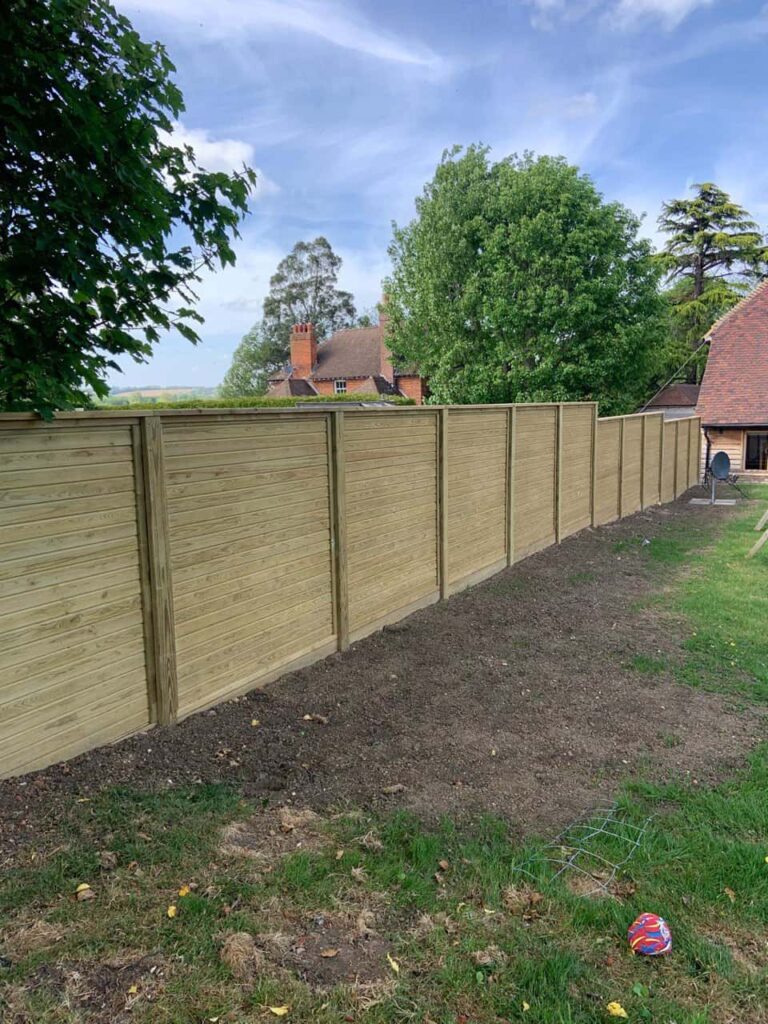
How Can Custom Fencing Complement the Style of Your Property?
Fencing has a practical role, but it also forms a prominent part of a property’s appearance. Its height, proportions, materials and finish can influence how the building and garden are perceived from both inside and outside the boundary.
Standard fencing may suit straightforward spaces, but it does not always respond well to unusual layouts or distinctive architectural features. Custom fencing can be planned around the property itself, creating a boundary that provides the required function while looking as though it genuinely belongs within its surroundings.
How Bespoke Fencing Creates a More Considered Finish
Matching the Character of the Property
The most suitable fence design depends partly on the appearance of the building. A traditional property may benefit from simple timber detailing and balanced proportions, while a more contemporary home might suit cleaner lines and a less decorative finish.
Custom fencing allows the design to draw on existing features such as:
- The style of the front entrance
- The shape and material of garden structures
- Existing timberwork or exterior detailing
- The layout of paths and driveways
- The colours used around the property
- The level of formality within the garden
The fence does not need to copy these features exactly. Subtle coordination is often enough to create a more unified appearance.
Choosing Proportions That Suit the Space
Fence height is not only about privacy. A boundary that is too tall for its position can make a compact front garden feel enclosed, while a low fence may not provide sufficient separation in a more exposed area.
Bespoke design allows the height, spacing and scale of each section to be adjusted. A lower and more open style may preserve visibility near an entrance, while taller sections can provide screening where it is genuinely needed.
Well-judged proportions help the fencing complement the building rather than dominate it.
Working With the Garden Layout
Gardens are rarely perfectly level or rectangular. Changes in height, curved boundaries, narrow sections and established planting can make standard panels difficult to integrate neatly.
Custom fencing can be configured around the actual layout. Panels may be stepped or adapted to changing ground levels, while individual sections can be sized to avoid awkward gaps and unnecessary infill pieces.
This tailored approach produces cleaner lines and can preserve more of the usable garden space.
Coordinating Gates With the Fence
A gate is often the focal point of a boundary, particularly at the front of a property or beside a driveway. If its proportions, materials or detailing differ noticeably from the adjoining fence, the complete installation can appear disjointed.
A custom design allows the gate and fence to be planned together. Board orientation, framing, post dimensions and decorative details can be coordinated to create a consistent entrance.
Practical matters such as opening space, access width and regular use can also be considered from the beginning.
Balancing Privacy With Natural Light
Solid fencing provides strong screening, but it can also reduce light and make some gardens feel smaller. Custom fencing offers greater control over where privacy is introduced.
For example, the design might combine solid lower sections with more open detailing above. Different heights can also be used across the boundary, providing screening near seating areas without unnecessarily enclosing the rest of the garden.
The result can feel private while still retaining a sense of space.
Selecting a Suitable Board Pattern
The arrangement of the boards has a significant effect on the overall style. Vertical boards often create a traditional, structured appearance, while horizontal layouts can produce broader visual lines.
Other options may include:
- Close-boarded sections for screening
- Spaced boards for a lighter appearance
- Slatted designs for filtered views
- Decorative top details
- Framed panels for stronger definition
- Mixed-height sections for varied garden needs
The choice should consider the property’s character as well as exposure, privacy and the intended use of the boundary.
Using Colour to Connect Different Features
The finish of timber fencing can help link it visually with sheds, gates, planters and other garden elements. A carefully chosen colour may allow the fence to recede behind planting or become a deliberate feature.
Consistency is generally more effective than introducing too many competing finishes. Planning the fence as part of the wider exterior scheme helps create a balanced result rather than treating it as a separate addition.
Creating a Better Setting for Planting
Fencing forms the backdrop to lawns, borders and climbing plants. Its height, colour and board arrangement can affect how clearly planting stands out.
A simple, evenly constructed fence can give varied planting a calmer background. Alternatively, a more detailed fence may suit a structured garden with carefully defined beds.
Custom planning can also account for mature shrubs and trees, helping the new boundary integrate with established garden features.
Responding to Different Parts of the Boundary
One fencing style does not always need to extend around the entire property. A front boundary may benefit from an open and welcoming design, while a rear seating area may require greater screening.
Custom fencing can respond to these different requirements while retaining common details that connect the sections. Matching posts, materials or finishes can preserve a consistent appearance even when heights or panel styles vary.
Why Professional Installation Matters
Even a well-designed fence will look unsatisfactory if the posts are misaligned, panel heights vary or details are finished inconsistently. Accurate setting-out is particularly important for bespoke fencing because the installation must follow the specific dimensions and changes in the site.
Professional installation helps ensure that:
- Lines and levels are carefully established
- Posts provide suitable support
- Panels fit the available spaces correctly
- Changes in height appear intentional
- Gates operate smoothly
- The finished boundary looks consistent
Good workmanship allows the chosen design to achieve its intended visual and practical effect.
Conclusion
Custom fencing can complement a property by reflecting its character, fitting the garden accurately and balancing appearance with privacy, access and light. Thoughtful choices about proportions, board patterns, gates and finishes create a boundary that feels integrated rather than added as an afterthought.
Fast Fix Fencing Impington provides bespoke fencing solutions in Impington, Cambridge. If you are considering new fencing and want a design suited to your property, contact our team to arrange an assessment and discuss the available options.
Call us on: 01223 912 290
Click here to find out more about Fast Fix Fencing Impington
Click here to complete our contact form and see how we can help with your fencing needs.