Is Your Garden Fence Providing the Privacy and Protection You Actually Need?
A garden fence does more than mark the edge of a property. It can screen overlooked areas, define how the garden is used and create a stronger boundary between private outdoor space and its surroundings.
However, a fence that remains upright is not necessarily performing effectively. Gaps, unsuitable panel styles, weak posts and poorly positioned gates can all reduce privacy and protection. For property owners in Impington, Cambridge, assessing the complete boundary can reveal whether maintenance, targeted repairs or replacement would provide a better result.
How to Assess the Performance of Your Garden Fence
The first step is to consider what you expect the fence to achieve. A front boundary may need to define the property without making it feel enclosed, while a rear garden might require greater screening and a stronger sense of separation.
The most suitable solution depends on the garden layout, surrounding viewpoints, ground conditions and how each part of the outdoor space is used.
Can People See Into the Areas You Use Most?
Privacy is not determined by fence height alone. The position of neighbouring windows, paths and raised ground can affect which parts of the garden remain visible.
Stand in the areas you use most often, such as patios, seating spaces and lawns, and look towards the surrounding boundaries. This can help identify specific sightlines that require screening.
In some gardens, replacing or adapting one section may provide the necessary privacy without changing the entire fence.
Does the Fence Have Gaps Between Panels?
Small gaps can develop when timber shrinks, boards move or panels pull away from posts. These openings may gradually reduce privacy even when the fence otherwise appears serviceable.
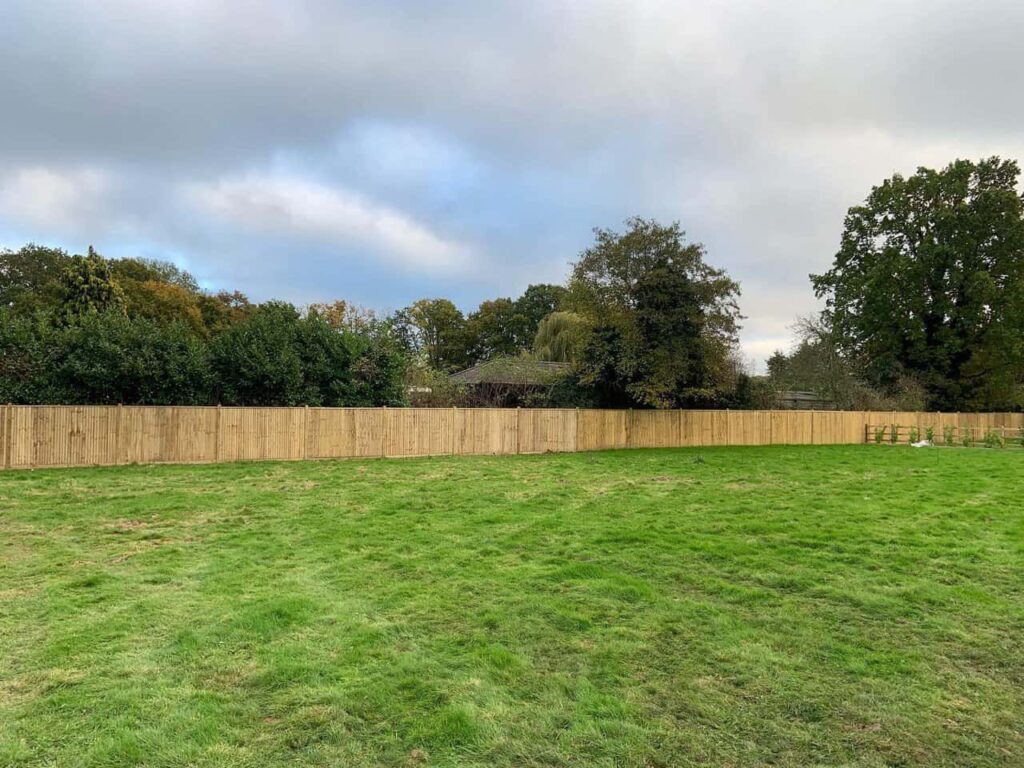
Close-boarded fencing can offer strong screening because its boards overlap. Other designs may intentionally include spaces to allow more light and airflow. The correct choice depends on whether privacy or openness is the main priority for that boundary.
A professional assessment can determine whether gaps can be repaired or whether the existing style is unsuitable for the intended purpose.
Are the Posts Still Secure?
Fence panels rely on stable posts. If posts lean, move in the ground or show deterioration near their bases, the complete fence line may become vulnerable.
Warning signs include:
- Panels moving noticeably in moderate wind
- Leaning sections
- Cracked or decayed posts
- Loose fixings
- Gaps developing between posts and panels
- Bases becoming exposed by soil movement
Replacing a weak panel without addressing an unstable post may only provide a short-term improvement. The supporting structure should be checked before deciding on the repair.
Are Damaged Panels Reducing Protection?
Split boards, broken rails and missing sections can make a boundary easier to pass through. Damage may also worsen quickly when wind reaches behind a loose panel.
This is particularly important where the fence separates the garden from an access route or where children and pets use the outdoor space. A secure fence should not contain openings, sharp broken timber or unstable components.
Targeted repairs may be suitable when damage is limited. Widespread deterioration may make a new fence the more dependable option.
Does the Gate Match the Rest of the Boundary?
A strong fence can still be undermined by a poorly fitted gate. Gates that drag, swing open or fail to close correctly create an obvious weakness in the boundary.
The gate should fit the opening accurately and operate without placing excessive strain on its posts. Hinges, latches and framing must be appropriate for its size and weight.
Integrating the gate with the fencing design also produces a more consistent appearance and level of screening.
Is the Fence Suitable for an Exposed Position?
Some parts of a garden experience greater wind exposure than others. Installing solid panels without considering local conditions can place considerable pressure on posts and fixings.
A suitable design should balance the desired privacy with the level of exposure. In some situations, a partially open panel or trellis section can provide screening while allowing some air to pass through.
Correct post spacing, secure foundations and suitable materials are essential for maintaining stability.
Could the Layout Provide Better Privacy?
The fence line itself may not always be the only consideration. A carefully planned layout can use different panel styles or heights to respond to how the garden is arranged.
For example, stronger screening may be useful beside a seating area, while a more open design could suit a part of the garden where light is important. Consistent materials and finishes can connect these sections without making the boundary look disjointed.
Planning the complete layout before installation helps avoid unnecessary changes later.
Is the Fence Affecting Light and Openness?
Maximum screening is not always the best solution. A tall, fully solid fence can make a compact garden feel enclosed or reduce light to nearby plants and windows.
Alternatives may include decorative panels, trellis-topped fencing or designs with controlled spacing. These can define the boundary while creating a lighter appearance.
The aim should be to achieve the required privacy without compromising how comfortable and usable the garden feels.
When Is Repair the Right Option?
Repair may be appropriate when the main structure remains sound and the problem is confined to a small number of components. Individual boards, panels, fixings or posts can sometimes be replaced while retaining the rest of the fence.
A successful repair should correct the cause of the damage as well as its appearance. If repeated movement, poor support or widespread timber deterioration is present, replacing isolated components may not produce a lasting result.
When Should Replacement Be Considered?
A replacement fence may be more suitable when:
- Several posts or panels are failing
- The existing design does not provide adequate screening
- Repairs have become frequent
- The fence line is leaning or uneven
- Gates no longer fit the openings correctly
- The current layout does not suit how the garden is used
A professional fencing contractor can assess the complete boundary and recommend a proportionate solution based on its condition and purpose.
Conclusion
An effective garden fence should provide the level of privacy, stability and separation your property genuinely needs. Its performance depends on more than appearance; panel design, post strength, gate operation and the layout of the garden all need to work together.
Fast Fix Fencing Impington provides professional fencing installation and repairs in Impington, Cambridge. If your existing fence no longer offers suitable privacy or protection, contact our team to arrange an assessment and discuss the most appropriate solution.
Call us on: 01223 912 290
Click here to find out more about Fast Fix Fencing Impington
Click here to complete our contact form and see how we can help with your fencing needs.